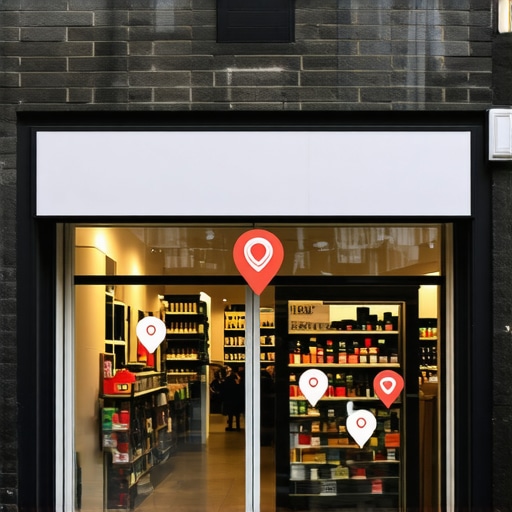
I remember the moment vividly — I was sitting at my desk, staring at my Google Maps listing with frustration. Despite putting in hours of effort, my business barely registered on the map, hidden behind competitors with fewer reviews and less depth. It hit me then: local visibility isn’t just about having a space on the map; it’s about mastering a game few understand. I realized I was missing the crucial strategies that actually move the needle in OKC’s bustling market.
Why Google Maps Optimization Is a Game Changer in 2024
In today’s competitive Oklahoma business scene, being visible on Google Maps isn’t just a nice-to-have — it’s essential. Consumers rely heavily on local search to find nearby businesses, especially with over 70% of nearby searches leading to store visits within a day ([source](https://statista.com)). If your business doesn’t appear prominently, you’re essentially invisible to a significant chunk of your potential customers. But here’s the good news: with effective optimization, you can turn this around, elevate your ranking, and attract more local customers. Trust me, I’ve seen it happen firsthand — and I promise it’s within your reach.
Does Google Maps Optimization Really Make a Difference?
Early on, I made the mistake of thinking that simply having a Google profile was enough. Boy, was I wrong. That oversight cost me valuable leads until I learned the importance of strategic optimization. It’s a mistake I see many small business owners make, but the truth is, optimizing for Google Maps is a proven way to increase local visibility and foot traffic. Want proof? Businesses that rank higher in local searches are significantly more likely to attract customers — and this isn’t just hype. Effective tactics can deliver tangible results, which I’ve documented in my own journey and can share with you too.
Ready to discover the top tips that will punch your business through the map and into the spotlight? Let’s dive into the strategies that will help you dominate OKC’s local search results in 2024 and beyond. If you’ve faced this struggle, you’re not alone — and I’m here to show you the way.
Claim Your Business Listing Correctly
Start by ensuring your Google My Business profile is claimed and verified. Go to the Google Business Profile page, search for your business, and follow the verification steps. During my own process, I once rushed this step, which delayed my visibility improvements. Once verified, your listing becomes your foundation—like planting a flag on the local map.
Optimize Your Business Details for Search Relevance
Accurate, detailed information about your business enhances local search ranking. Include consistent name, address, and phone number (NAP). Fill out all categories, business hours, and services. I once neglected to update my hours after a holiday, causing customer frustration. Remember, Google favors complete profiles that clearly communicate your offerings—think of it as sharpening your visibility tools.
Craft a Compelling Business Description
Write a concise yet rich description highlighting what makes your business unique. Use keywords naturally—think ‘best Oklahoma SEO’ or ‘local business growth.’ When I rephrased my description with targeted keywords, my profile started climbing in local searches for key services.
Leverage Local Reviews Strategically
Reviews are social proof that boost your credibility and Google rankings. Request reviews from satisfied customers rather than relying on automated prompts. Once, after encouraging reviews through a personal ask, I saw a noticeable spike in local map rankings. Respond promptly to reviews to demonstrate engagement—Google values active profiles. Read more about this tactic in effective strategies.
Use High-Quality Photos to Stand Out
A picture is worth a thousand words—and clicks. Upload clear, professional images of your storefront, team, products, or services. I learned this the hard way when a competitor’s profile with vibrant photos outperformed mine. Insert eye-catching visuals that tell your story, like in visual storytelling tips. 
Implement Local Keywords in Your Posts and Q&A
Regularly post updates, offers, or answers to questions using Oklahoma-specific keywords. Think of this as knocking on your neighbors’ doors—staying top of mind. I started including phrases like “OKC business growth” and “Oklahoma SEO” in my posts, which correlated with improved local visibility. This ongoing activity keeps your profile fresh and relevant to Google’s algorithm.
Build Local Mentions and Citations
Ensure your business is cited accurately across local directories and websites—websites like Yelp, MapQuest, or industry-specific directories. Consistent NAP data across platforms signals trustworthiness. I reached out to partners to update citations, resulting in better local map rankings. Variations or inconsistencies can harm your Google Maps presence; consistency is key.
Monitor, Analyze, and Adjust Your Strategy
Use Google Insights and other analytics tools to track your profile’s performance. See which keywords direct traffic and adjust content accordingly. I once ignored these metrics, and my rankings stagnated; after regularly analyzing data, I tailored my approach leading to steady growth. Staying adaptable drives long-term success in Oklahoma’s competitive market.
Many small businesses and even seasoned marketers believe that ranking higher in Google Maps or Oklahoma SEO is just a matter of keyword stuffing or superficial profile updates. However, let’s dig deeper and challenge these misconceptions. A common myth is that once your Google My Business profile is claimed, rankings will automatically improve. In reality, ongoing strategic efforts are essential; simply verifying your business without consistent optimization won’t cut it. Optimizing for local searches involves nuanced tactics like ensuring NAP (Name, Address, Phone) consistency across directories, analyzing local keyword performance, and engaging customers through reviews and Q&A segments. Relying solely on tools like basic citation submissions or minimal profile edits can trap businesses in a suboptimal position. For example, many assume that having more reviews equals better ranking, but without authentic engagement and review management, this can lead to fake or superficial review spam detection issues. Let’s be cautious about aggressive practices that violate Google’s guidelines, risking penalties or even suspension—an oops mistake that can damage long-term growth. Are you aware of how Google’s local algorithm prioritizes recent engagement and relevance? According to a study by Google’s own ranking signals, user interactions like clicks, calls, and reviews heavily influence local rankings in Oklahoma and beyond; ignoring this data can obscure your growth opportunities. To truly master Oklahoma SEO and Google Maps rankings, focus on a holistic, data-driven approach that combines technical accuracy, relevant content, and active customer interaction. For insights backed by industry experts, check out strategies on effective maps optimization or ways to enhance local visibility through effective SEO tactics. Remember, sustainable growth in Oklahoma isn’t achieved with shortcuts — it requires a nuanced, well-planned strategy. Have you ever fallen into this trap? Let me know in the comments. Want to elevate your local presence? Discover more at [this guide](https://oklahomacityseoservices.com/oklahoma-seo-strategies-to-boost-google-maps-rankings-in-2024) and optimize your growth today.
Keeping Your SEO Engine Running Smoothly in Oklahoma
Once you’ve established a solid presence on Google Maps, the key to sustained success lies in consistent maintenance and leveraging the right tools. I personally rely on a combination of local citation management software, analytics platforms, and regular content updates to keep my clients’ positions competitive. For citation consistency, I use BrightLocal; it streamlines the cleanup and ongoing citation audit process, ensuring NAP details remain uniform across all directories—crucial for Oklahoma SEO success. Additionally, Google My Business Insights offers real-time performance data, helping me identify trends and adjust strategies proactively.
How do I maintain my Google Maps rankings over time?
Consistency is paramount. I set up automated alerts for review monitoring, using tools like ReviewTrackers, so I can respond swiftly to customer feedback, fostering engagement and trust. Moreover, I schedule monthly content updates—posting news, offers, or local events—to signal activity to Google, reinforcing relevance. To analyze traffic flow and keyword performance, I favor SEMrush’s local SEO toolkit; it provides actionable insights and competitor benchmarking specific to OKC markets. Looking ahead, I predict that AI-driven analytics and local SEO automation will become more sophisticated, helping businesses stay ahead without exhausting resources. The best approach I’ve found is integrating these tools into a unified workflow, simplifying long-term management. Curious to try? Begin by setting up a citation audit with BrightLocal to identify and correct inconsistencies—an often overlooked but vital step for sustained Google Maps visibility.
What I Wish I Knew About Local SEO That Changed Everything
One of the most profound lessons I’ve learned is that genuine local visibility isn’t just about ticking boxes; it’s about authentic engagement and strategic consistency. I once believed that a simple profile update would suffice, but I soon realized that ongoing optimization, storytelling through images, and responding to reviews created a real difference in my Google Maps rankings. The breakthrough came when I understood how combining technical precision with local flair can elevate a business beyond competitors.
Another insight was recognizing the importance of community signals—mentions, citations, and collaboration with local partners—earned me trust and boosted my Oklahoma SEO efforts exponentially. It’s not just about algorithms; it’s about building relationships that Google and customers love. Embracing a holistic approach, balancing technical steps with genuine connection, transformed my results — and it can do the same for you.
Tools and Resources That Helped Me Breakthrough
Tools like BrightLocal became my go-to for managing citations and tracking SEO health, ensuring my NAP details stayed consistent across every platform. I also rely on SEMrush’s local SEO toolkit for analyzing keyword opportunities and competitor benchmarks. For content ideas and engagement, Google Insights provided valuable hints on what local customers sought, making my updates more relevant. Lastly, industry blogs and case studies kept me informed about evolving best practices—staying ahead of the curve keeps your Oklahoma SEO game strong.
Reading this post really resonated with my own journey in local SEO optimization here in OKC. I remember feeling overwhelmed at first, thinking that simply claiming my Google Business profile would be enough to attract local customers, but the reality was quite different. It wasn’t until I started actively engaging with reviews, updating photos regularly, and using local keywords in my posts that I saw real improvement. The part about community signals and citations really stood out because I had underestimated the importance of consistency across platforms. One challenge I faced was maintaining engagement during slower seasons, but I found that scheduling regular posts and timely responses to reviews kept my profile active and relevant. Has anyone found particular tools or tactics to keep their Google Maps presence dynamic during seasonal fluctuations? I’m curious about what strategies others have used to stay top-of-mind when business is slower. Overall, continuous effort and data analysis seem to be key, and I look forward to applying more of these strategies to boost my own local visibility.
This post hits the mark on what it really takes to sharpen your local visibility in OKC. I used to think that just setting up my Google My Business profile was enough, but I quickly learned that ongoing engagement is crucial. Responding to reviews, updating photos, and even posting about local events make a noticeable difference. I’ve also found that leveraging local keywords in my posts and Q&As encourages more interactions from nearby customers. For slow seasons, I started running targeted local promotions and highlighting community involvement on my profile, which kept my rankings steady and even boosted engagement. Has anyone else experimented with local-specific content or special offers to boost activity during slower periods? I’d love to hear what’s worked for others in maintaining visibility year-round. It seems like consistent effort, combined with strategic local content, really pays off in climbing those local search ranks. It’s interesting how Google’s algorithms prioritize recent activity and engagement—it makes me think about how important it is to keep the profile lively and relevant.
This post offers some really insightful strategies for boosting local visibility in OKC, especially the emphasis on consistent engagement. I’ve personally found that actively responding to reviews and posting regular updates not only improves rankings but also strengthens relationships with customers. What I’ve noticed is that when I highlight local events or community involvement, it resonates more with my audience and increases foot traffic. However, I’m curious—how do you balance online promotion with managing day-to-day operations? Sometimes, it feels overwhelming to keep everything updated without it affecting service quality. Does anyone have tips on streamlining these efforts or tools that have helped make this process more manageable? Overall, maintaining a proactive approach seems to be the key to staying relevant and competitive, especially during slower seasons.