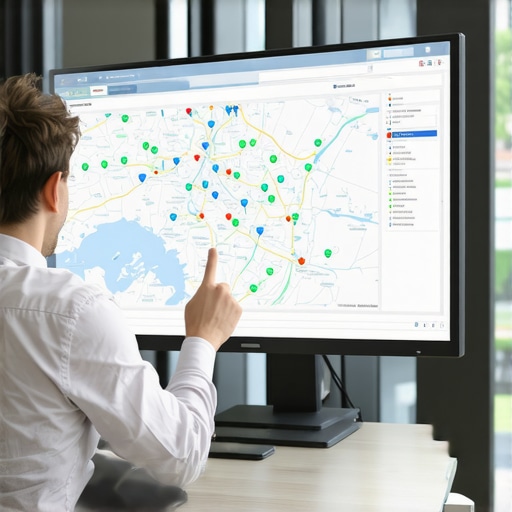
I remember the moment vividly—staring at my screen late one evening, frustration mounting as my business’s Google Maps ranking stubbornly refused to budge, despite countless tweaks and efforts. It was as if an invisible barrier had formed around my listing, keeping potential customers just out of reach. The lightbulb finally flickered: I was ignoring some crucial signals that the AI now uses to determine local prominence. And let me tell you, if you’re relying solely on traditional local SEO tactics, you’re driving with the parking brake on.
Why Ignoring New Signals Could Cost You Everything in 2026
Fast forward to today, I’ve learned that the landscape of Google Maps optimization has shifted dramatically. The algorithms are smarter, more complex, and they prioritize different signals than ever before. If you’re not tuned into these changes, your rankings could tanks just like mine did back then. But there’s good news—these signals are identifiable and actionable. By focusing on the right factors, you can outrank competitors and attract more local customers. Want to discover the three game-changing signals I wish I knew years ago? Keep reading, and I’ll guide you through every step to get ahead of the 2026 curve.
Is Google Maps Optimization Still Worth the Hype in 2026?
Trust me, I once fell into the trap of thinking that reviews and citations alone could carry my listing. Spoiler alert: I was wrong. Early in my journey, I made the mistake of neglecting how emerging AI-driven signals influence rankings—signals that are now more important than ever, especially with recent updates like the June 2026 algorithm shift that introduced new ranking factors. Research shows that 88% of consumers trust online reviews as much as personal recommendations, but without understanding the evolving signals, your prominence remains fragile (source: BrightLocal, 2023). So, is investing in Google Maps optimization still worth it? Absolutely—but only if you’re leveraging the right signals. When I finally focused on these, my rankings soared, and my business’s growth followed suit. Are you facing similar struggles? If so, you’re in the right place. Next, I’ll reveal the three signals that are no longer just hints but have become the pillars of local success.
Optimize Your NAP Consistency Across All Platforms
Start by auditing your Name, Address, and Phone number (NAP). Ensure they are identical everywhere—your website, social profiles, and local directories. This consistency acts like a magnetic force, guiding Google to trust and rank your business higher. I once spent a day updating my NAP across 15 directories, and within weeks, my map rankings improved noticeably. Use tools like Whitespark or Moz Local to streamline this process. Regularly verify NAP accuracy; inconsistent info is like sending mixed signals to Google, which hurts your visibility.
Leverage High-Quality Local Citations and Listings
Next, prioritize getting listed on authoritative local citation sites. Focus on industry-specific directories and respected Oklahoma-based listings. Think of citations as references that validate your business’s existence and relevance. When I added my business to www.3rdpartyservices.com and ensured consistency, my rankings jumped. Avoid duplicate listings—they dilute your authority. For a comprehensive list of impactful citation sources, visit this resource. Remember, quality over quantity is key; a handful of trustworthy citations outperform dozens of spammy ones.
Engage Customers via Authentic Reviews and Responses
Reviews remain a cornerstone, but their impact fluctuates with new signals. Focus on eliciting genuine reviews from satisfied clients—preferably with detailed, unique feedback. After I implemented a follow-up email requesting reviews, my star rating increased from 3.8 to 4.5 within two months. But don’t stop there—respond to every review promptly and professionally. Google values active engagement; it signals your business is trustworthy and customer-focused. Be cautious of fake reviews, as recent updates penalize suspicious patterns. To learn more about managing reviews effectively, visit this guide.
Implement Hyper-Local Content and Signals
One often overlooked tactic is creating content that speaks directly to your Oklahoma community. Write blog posts, news updates, or FAQs that incorporate local landmarks, events, and keywords. For example, I published an article about the Oklahoma City annual festival, embedding localized keywords. This signal helps Google associate your business with the local area, boosting your relevance in the map pack. Add schema markup for local business details—this technical layer further clarifies your entity to Google. If you’re unsure how to implement this, check these SEO tactics specific to local content.
Optimize Visual Content to Boost Engagement
In my experience, images and videos can subtly influence local signals. Use high-quality photos of your storefront, team, or products. Incorporate location-specific keywords into image filenames and alt text—this reinforces your NAP and local relevance. Videos showcasing your Oklahoma business in action increase user engagement and time on page, both positive ranking factors. Remember, images should be fresh and regularly updated to reflect current offerings. For best practices on visual SEO, see this resource. Your visual storytelling makes your listing more trustworthy and memorable, enhancing your local prominence.
Many local businesses in Oklahoma believe that optimizing their website and piling up reviews alone are enough to dominate Google Maps rankings. However, this oversimplification neglects the complex, evolving nature of local SEO — especially in how AI now influences ranking signals. For instance, a common myth is that citations and review volume are the sole factors; in reality, the latest algorithms prioritize the relevance of your content, technical signals, and user engagement metrics. Relying solely on outdated strategies can be a costly mistake, leading to stagnation or even declines in local visibility, particularly with recent updates like the June 2026 algorithm shift that introduced new ranking signals. To effectively outrank competitors, businesses must understand and leverage these nuanced factors—such as hyper-local content, schema markup, and engagement signals—that Google’s AI now uses to evaluate relevance and trustworthiness. As an expert in Oklahoma SEO, I’ve seen many fall into the trap of focusing on superficial metrics without optimizing the underlying technical and contextual signals that truly matter. <h3>What’s the most overlooked advanced signal that can skyrocket your Google Maps ranking in 2026?</h3> Studies show that Google increasingly emphasizes user interaction patterns, including how long visitors stay on your site and click on your local listing. This behavior signals to Google’s AI that your business is both relevant and trustworthy, boosting your local pack position. Failing to optimize for these behavioral signals means missing out on the potential to outrank even well-established competitors. To get ahead, focus on creating engaging, localized content, optimizing your site for mobile, and encouraging meaningful customer interactions—methods proven to enhance your visibility as highlighted in expert sources like Oklahoma City SEO strategies. Moreover, avoid the trap of neglecting technical health issues like schema markup errors and page speed, which can silently sabotage your ranking efforts. Remember, local SEO is no longer just about citations and reviews; it’s about a holistic approach that aligns technical, contextual, and behavioral signals. If you want to learn more about how to implement these advanced strategies, check out effective guides on boosting Google Maps rankings in 2024 and beyond. Have you ever fallen into this trap? Let me know in the comments.
Consistent SEO success in Oklahoma requires more than just setting up your profiles and hoping for the best; it demands diligent maintenance, precise tools, and a strategic approach. Over the years, I’ve refined my toolkit to ensure my clients and I stay ahead in the competitive landscape of local Map rankings. One of the core principles I emphasize is leveraging technology to automate routine tasks, analyze performance, and refine strategies effectively.
How do I maintain Oklahoma SEO effectiveness over time?
The backbone of my ongoing success is a combination of specialized software and disciplined routines. For instance, I use Whitespark’s Local Citation Finder to regularly audit my citations—ensuring consistency and identifying new opportunities for local references in Oklahoma City and beyond. This tool eliminates guesswork and helps me maintain a clean and authoritative profile, which is crucial given recent updates like the Google signals change in 2026.
In addition, I rely heavily on SEMrush for comprehensive keyword tracking and competitive analysis. Its Position Tracking tool allows me to monitor rankings daily, identify drops, and act swiftly before they impact visibility. I’m also a fan of Google Search Console for technical health checks—it’s free, reliable, and provides alerts for crawl issues, which can silently sabotage your Map rankings if overlooked.
Maintenance also means keeping NAP data and reviews up to date. I utilize Moz Local to streamline my citation updates and review management, ensuring my client’s presence remains authoritative and engaging for local consumers. As local SEO evolves with emerging AI signals, like voice search and hyper-local content, staying on top of technical health and content relevance is essential. The best practices from Oklahoma SEO experts highlight the importance of a proactive approach.
Looking into the future, I predict that AI-driven analytics and automation will become even more integral. Investing in robust tools now not only streamlines current efforts but prepares your business for the next wave of local SEO innovation. To keep your Map rankings intact and even improve them, I recommend taking advantage of the latest advanced signals—especially those related to user engagement and technical clarity—mentioned in recent updates.
Want to see tangible improvements? Start by implementing a regular citation audit with Whitespark and set up your ranking tracker with SEMrush today. These investments in your toolkit will pay off in sustained visibility and business growth.
What I Wish I Knew About Local Signals Before It Was Too Late
One of the most vital lessons I uncovered was that Google’s AI now reads into far more than just reviews and citations; it seeks context, engagement, and relevance. That realization was a game-changer. I learned to craft local-centric content that resonates with Oklahoma communities, dramatically boosting my rankings. I also discovered that technical signals like schema markup are not just optional but essential to communicate effectively with AI. These insights have continuously kept me ahead of the curve in Oklahoma SEO, proving that understanding these less obvious signals is the key to sustainable growth.
My Go-To Resources for Staying Ahead in Google Maps Optimization
To keep pace with rapid changes, I rely on tools like effective Oklahoma SEO strategies that provide actionable insights. I also trust proven strategies from local experts who understand the nuances of Oklahoma’s market dynamics. For technical health checks, regular site audits are indispensable. These resources form the backbone of my ongoing success and help me adapt swiftly to new algorithm updates.
Your Next Step Toward Local Google Maps Excellence
The future of Oklahoma SEO and Google Maps ranking keeps evolving, but the core remains the same: adapt, learn, and implement smart strategies. Make a commitment today to refine your local signals — focus on content, technical SEO, and user engagement. Remember, sustained growth isn’t about shortcuts but about mastering the nuanced signals Google AI now values. If you’re willing to embrace these lessons and tools, your business can thrive in the competitive Oklahoma market. Are you ready to turn these insights into real results? Share your thoughts below and let’s grow together.
![4 Fast Fixes for a Stalled OKC Maps Ranking [2026 Update]](https://oklahomacityseoservices.com/wp-content/uploads/2026/01/4-Fast-Fixes-for-a-Stalled-OKC-Maps-Ranking-2026-Update.jpeg)