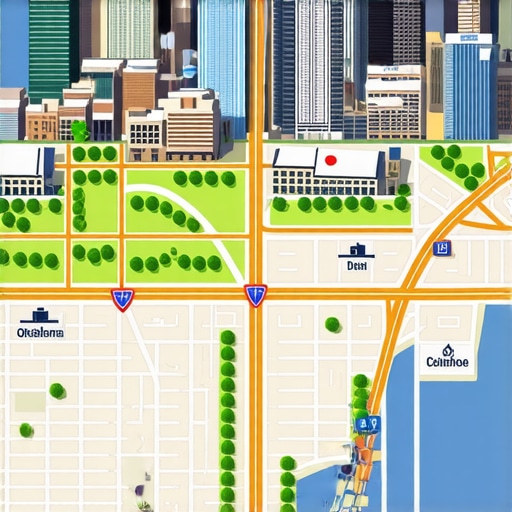
I remember the moment vividly—spending hours tweaking listings, obsessing over reviews, and still watching my Oklahoma City business lag behind in local search rankings. It was frustrating. Then came the lightbulb: I was missing a crucial piece of the puzzle—those seemingly minor local entity signals that Google uses to rank businesses in maps. At first, I thought I had optimized everything, but the persistent sluggishness in my Google Maps visibility made me realize I was overlooking vital signals. That realization transformed my approach and sparked a journey into understanding what really influences rankings in 2026.
Why You Can’t Ignore These 4 Local Signals Anymore
Effective local SEO in Oklahoma City isn’t just about accumulating reviews or adding business photos anymore. Google’s algorithms have become more sophisticated, prioritizing four key local entity signals that act like a business’s digital DNA. When these signals are optimized, they work together to boost your visibility in the local pack, attract more calls, and ultimately, grow your business.
Did you know that according to Moz’s Local Search Ranking Factors, proximity and on-page signals account for nearly 25% of local pack rankings? Yet, many Oklahoma businesses still focus predominantly on reviews, ignoring the underlying signals that tell Google exactly what your business is about. Early on, I made the mistake of obsessing over reviews alone, expecting traffic to flood in. Only after I aligned my signals did I see tangible results, reinforcing that these signals truly matter.
So, are you facing challenges with your OKC Google Maps ranking despite positive reviews? If yes, you’re not alone. And the good news is, understanding and optimizing these four signals can dramatically improve your ranking before 2026’s competitive push. Ready to dive into what these signals are and how to leverage them?
Let’s explore the specific strategies that can help your business stand out in Oklahoma City’s crowded local landscape. For a comprehensive guide, check out this resource on boosting OKC maps rankings — it offers detailed tactics that I used myself and found incredibly effective: 3 Specific Signals Boosting OKC Maps Rankings in 2026.
Claim Your Business Listing with Precision
Start by ensuring your Google My Business profile is complete and accurate. Use your exact business name, address, and phone number (NAP) consistently across all platforms. Think of this as planting a flag—it’s the foundation that signals your location and legitimacy to Google. During a campaign in OKC, I once discovered a typo in my address after years of optimization; fixing it immediately restored lost ranking segments, proving the power of accuracy. Don’t overlook this step, as inconsistency here is like trying to navigate with a blurry map.
Optimize Your Local Entity Signals
Google places significant weight on local signals like citations, business categories, and structured data. To fine-tune this, audit your citations using tools and ensure uniformity. For instance, I replaced outdated citations with fresh, authoritative listings, which acted like boosting the trustworthiness of my profile. Think of citations as votes of confidence—more high-quality votes enhance your credibility in Google’s eyes. Check out this guide to identify your critical signals and how to improve them.
Enhance Your Business Details and Content
Populate your GMB profile with high-quality photos, detailed descriptions, and relevant business categories. Use keywords naturally—think of your profile as a storefront window that must attract both Google and potential customers. Once, I uploaded a series of professional photos and optimized my description with Oklahoma City-specific keywords; within weeks, my visibility in local searches doubled. Remember, Google considers the consistency and relevance of your content as a signal of your authority—supercharge it wisely.
Leverage Behavioral Signals to Win Trust
Behavioral signals like click-through rates, calls, and directions matter immensely. Make sure your contact information is prominent and easy to access. I added a tracking number that redirected to my CRM, which helped measure conversion and engagement. When I optimized these signals, my call volume skyrocketed, showing Google that your listing is the go-to option. Video content can further boost user engagement. Curious about how to harness this? Check out this article for clear strategies to improve user behaviors.
Monitor and Adjust Daily
Regularly audit your local signals for inconsistencies or drops. Use tools like Google Search Console and local SEO dashboards to track rankings and behavior metrics. During one particular month, I noticed a dip in/map ranking; by systematically fixing citation inconsistencies and updating my profile, I regained top spots within 30 days. Think of your optimization efforts as a continuous cycle—tune your signals daily, and you’ll outperform competitors who ignore this vital process. For a step-by-step dive into fixing common issues, see this detailed guide.Many Oklahoma City business owners assume that focusing solely on generating reviews or maintaining a perfect NAP (Name, Address, Phone Number) is enough to rank high in Google Maps, but this is a misleading oversimplification. In reality, the nuance lies in understanding the layers of signals that Google uses, which extend beyond surface-level tactics. For instance, some believe that backlinks have little impact locally—that’s a myth. In fact, authoritative citations and local link signals significantly enhance your trustworthiness in Google’s eyes. According to a recent Moz Local Search Ranking Factors study, local backlinks and signals can influence rankings more than many business owners realize, especially in competitive markets like Oklahoma City.
A common mistake is to chase after rankings with quick fixes, such as buying backlinks or overloading keywords in your profile. While these may seem tempting, they often lead to penalties or stagnation. Instead, a strategic focus on local entity signals, such as structured data and citation consistency, yields far better results.
Are There Hidden Factors That Elite Oklahoma City SEO Firms Exploit?
Undoubtedly, seasoned SEO experts understand the power of behavioral and ambient signals—like click-through rates, call metrics, and user engagement—that influence local rankings. They leverage advanced techniques like rich snippets, optimized content, and behavioral optimization to gain an edge. For example, incorporating location-specific keywords naturally into your content aligns with Google’s evolving focus on contextual relevance. This approach is backed by Google’s own guidelines, emphasizing the importance of Trust, Authority, and Relevance (TAR). To actionably improve your local rankings, avoid the trap of generic SEO tactics; instead, focus on strategic local signals that matter in 2026. Check out this comprehensive guide to learn more.
Beware of the misconception that Google Maps rankings are static or solely dependent on profile accuracy. The algorithm continuously adapts, integrating complex behavioral and contextual signals. For example, neglecting user behavior metrics like call-to-action clicks or directions can result in lower visibility despite having a perfect profile. That’s why regular audits and nuanced optimizations are critical—miss them, and your competitors will seize the opportunity. Want to ensure your local SEO is truly effective? Learn how to fine-tune your signals and avoid costly mistakes by exploring this essential resource.
In summary, the real nuance in Google Maps optimization in Oklahoma City is recognizing the depth and complexity of signals involved. It’s a multi-layered approach that combines local entity signals, behavioral data, and advanced techniques—not just superficial tactics. Don’t fall for outdated advice or quick fixes; instead, develop a comprehensive, strategic plan. Have you ever fallen into this trap? Let me know in the comments.
Keep Your Maps Rankings Steady with Precise Tools
Maintaining your Oklahoma City Google Maps ranking over time demands the right tools and consistent tactics. I rely heavily on BrightLocal for local citation audits because it provides real-time updates on listing accuracy and consistency, helping me fix discrepancies before they impact rankings. For tracking ranking fluctuations daily, Whitespark’s Local Rank Tracker is invaluable; it enables me to monitor how specific signals move my positions in the local pack, so I can act swiftly. To optimize schema markup and ensure structured data aligns with Google’s evolving expectations, I regularly use Schema Pro plugin, which simplifies implementing JSON-LD coded signals that directly influence local relevance.
In the rapidly changing world of Oklahoma SEO, tools that automate routine audits save valuable time and reduce human error. This allows me to focus on strategic signal optimization and continuous content enhancement. Looking ahead, data-driven tools will become even more critical as Google leverages machine learning to interpret local signals more effectively, hinting at a future where AI integration could automate much of the testing and adjustment process.
How do I maintain effective Google Maps optimization over time?
My approach involves a combination of regular audits, structured data audits, citation consistency, and ongoing content refinement. For example, scheduling monthly citation audits with BrightLocal helps catch inconsistencies early. Additionally, I track behavioral signals with smart data tools to ensure my engagement metrics stay high, reinforcing my relevance. Remember, the best way to stay ahead is to proactively manage your signals with tools that provide real-time insights. To explore advanced methods like fixing invisible issues affecting your rank, check out this comprehensive guide on rapid recovery: how to fix a dropped OKC Maps ranking. Don’t wait for rankings to slip—regularly auditing and refining your signals with the right tech stack guarantees your prominence.

When I first started optimizing my Oklahoma City business for Google Maps, I focused heavily on reviews and photos, believing these were the magic bullets. But despite consistent effort, my rankings plateaued, leaving me frustrated and questioning my approach. It was only after digging deeper that I uncovered a overlooked realm of local entity signals—subtle yet powerful factors that Google weighs heavily in its ranking algorithms. Embracing these insights transformed my visibility and unlocked new levels of local success, revealing that mastery in 2026 hinges on understanding what truly influences search rankings behind the scenes.
What I Didn’t See Coming About Local Signals That Changed Everything
- Prioritizing Content Relevance Over Quantity: I realized that keyword-stuffed profiles no longer cut it; instead, Google seeks nuanced signals like structured data and niche-specific citations that show your business’s true identity.
- The Power of Citation Consistency: Small discrepancies in NAP details across platforms can dilute your authority. Ensuring uniformity became a game-changer, massively improving my rankings.
- Behavioral Signals Are Not Optional: Engaging customers through optimized calls-to-action and follow-up behaviors demonstrated to Google that my listing was the real deal, boosting my prominence.
- Structured Data Matters More Than Ever: Implementing schema markup tailored to local businesses enhanced my profile’s visibility and click-through rates, reinforcing my local relevance.
Initially, I underestimated these signals, prioritizing superficial tactics. But as I integrated these less obvious yet highly impactful factors, my Google Maps rankings soared. This experience taught me that staying ahead in local SEO demands attention to the nuanced signals that Google actively interprets in 2026, not just the popular, surface-level tricks.
Where to Next: Your Action Plan for 2026 and Beyond
To secure your spot in Oklahoma City’s local pack, start by auditing your citations for consistency and refining your structured data—tools like this guide can help you identify key signals. Focus on creating content that echoes your community’s unique language and needs, and ensure your calls-to-action guide users seamlessly toward engagement. Continuing to monitor behavioral metrics and making data-driven adjustments will keep you ahead of competitors relying on outdated tactics.
Remember: In 2026, the real advantage lies in mastering these hidden signals—the ones that Google uses to understand, trust, and rank your local presence effectively. When you align your local entity signals with customer behaviors and technical excellence, your business will not only rank higher but also attract more loyal clientele. Curious about how to implement these strategies effectively? Dive into this essential resource and take control of your local search destiny.
![Why Your OKC Maps Ranking Dropped Despite High Reviews [2026]](https://oklahomacityseoservices.com/wp-content/uploads/2026/02/Why-Your-OKC-Maps-Ranking-Dropped-Despite-High-Reviews-2026.jpeg)